

___
In conversation with Master Upholsterer – Steve Bloomer

Sculpted contours. Flowing organic lines. Elegantly
comfortable forms. None of these trademark elements of the Boss Design style would be possible without the expert tailoring our highly skilled upholsterers bring to the table. They are turning their trade into an art form, which is part and parcel of the way we make our furniture.
The art of patterning is a creative philosophy articulated by one of our master upholsterers,
Steve, an upholsterer of over 25 years who works alongside our designers to develop new lines of
furniture.
“When I first started making furniture, everything was very square. Square arms, square back, square seats. You could go into any bank anywhere in the world and it would have very
blocky furniture, like Lego. They were so easy to pattern it was unbelievable” says Steve.

Steve found inspiration watching videos of seamstresses and tailors. These skilled practitioners on Saville Row measure, cut and stitch fabric to fit the curved lines of the human form, and Steve now does the same as he figures out how to cover the sculpted forms our designers come up with.
“For example, there’s our latest wing back chair, Amelia,” says Steve. “With flowing, never-ending lines like that it’s extremely hard to convince a piece of fabric to warp itself around the shape. We don’t like exposed seams or zips on show, so you have to get really creative with regards to how you cut the pattern and stitch it so that everything is concealed.”
All the while, he’s thinking creatively, looking for
better ways to accentuate the design by better
positioning the seams. “Could we curve it, could
we taper it, could we tailor it to make it more
attractive? I’ve moved away from just putting
seams where you expect them,” he says.
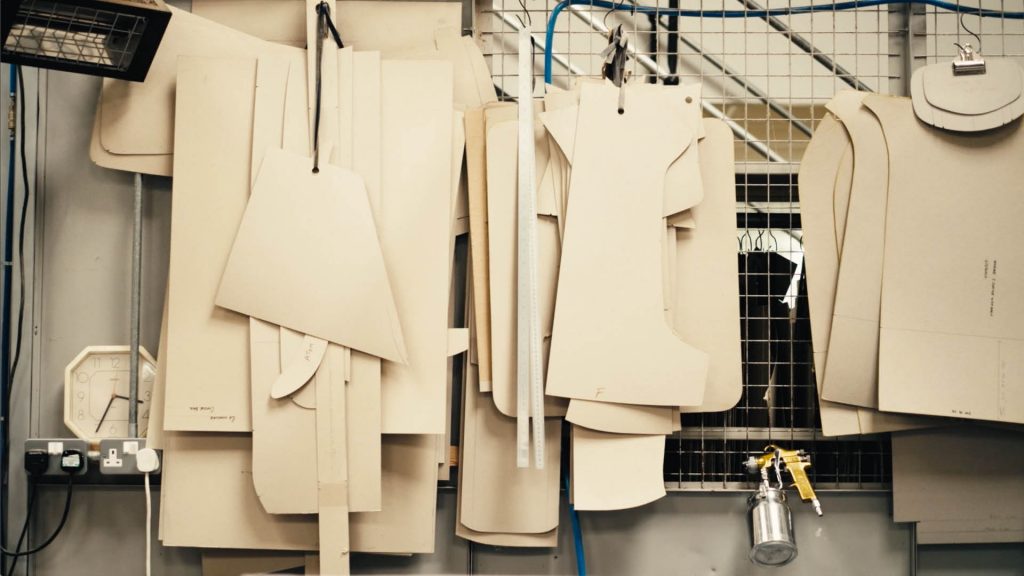
Even when the perfect pattern has been
developed for a new armchair or sofa, Steve
will not rest. His meticulous dedication to detail
exemplifies the Boss approach, and a commitment
to ensure that whether the seat we manufacture
is number one, 500 or 5,000, its form will replicate
exactly the original design.
The challenge is that every fabric has its own
individual qualities. For example, leather is thicker
and stiffer than textiles, while the new sustainable
fabrics Boss Design is introducing have different
levels of flexibility and suppleness than man-
made fibre. This is where Steve takes the art of
patterning to another level.
“Outside of work I’m an artist and I’ve always
punished myself trying to achieve perfection,” he
says. “Twenty years ago, if we’d designed a chair like
Amelia we’d have done one pattern for it, but I’ve
got to the point where I’ve realised that every piece
of furniture needs more than one pattern. Every
fabric will hold to the form of the piece in a different
way, so we adjust our patterns for each fabric we
use.”
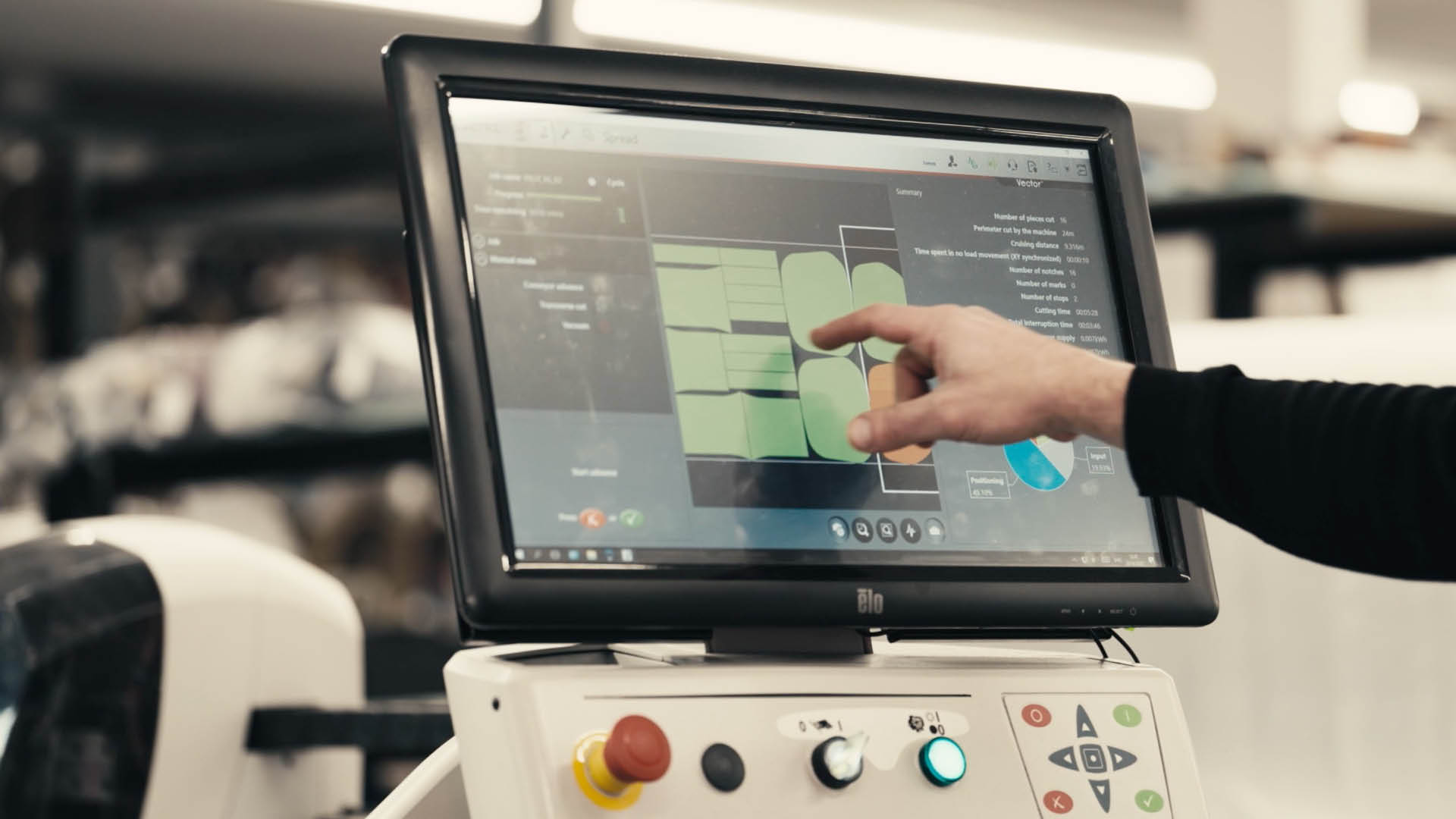
This is possible thanks to our use of the latest
technology. “We’ve got a computer-aided
patterning machine with the ability to grow or
shrink a pattern by length, width or on the diagonal,
and you can customise each individual panel if you
need to. Even if you’ve got a crazy fabric that you
think will never fit, we can adjust the digital pattern
in seconds. It’s engineered patterning – millimetre
perfect,” he says.
___
In conversation with Master Upholsterer – Steve Bloomer
Sculpted contours. Flowing organic lines. Elegantly
comfortable forms. None of these trademark elements of the Boss Design style would be possible without the expert tailoring our highly skilled upholsterers bring to the table. They are turning their trade into an art form, which is part and parcel of the way we make our furniture.
The art of patterning is a creative philosophy articulated by one of our master upholsterers,
Steve, an upholsterer of over 25 years who works alongside our designers to develop new lines of
furniture.
“When I first started making furniture, everything was very square. Square arms, square back, square seats. You could go into any bank anywhere in the world and it would have very
blocky furniture, like Lego. They were so easy to pattern it was unbelievable” says Steve.
Steve found inspiration watching videos of seamstresses and tailors. These skilled practitioners on Saville Row measure, cut and stitch fabric to fit the curved lines of the human form, and Steve now does the same as he figures out how to cover the sculpted forms our designers come up with.
“For example, there’s our latest wing back chair, Amelia,” says Steve. “With flowing, never-ending lines like that it’s extremely hard to convince a piece of fabric to warp itself around the shape. We don’t like exposed seams or zips on show, so you have to get really creative with regards to how you cut the pattern and stitch it so that everything is concealed.”
All the while, he’s thinking creatively, looking for
better ways to accentuate the design by better
positioning the seams. “Could we curve it, could
we taper it, could we tailor it to make it more
attractive? I’ve moved away from just putting
seams where you expect them,” he says.
Even when the perfect pattern has been
developed for a new armchair or sofa, Steve
will not rest. His meticulous dedication to detail
exemplifies the Boss approach, and a commitment
to ensure that whether the seat we manufacture
is number one, 500 or 5,000, its form will replicate
exactly the original design.
The challenge is that every fabric has its own
individual qualities. For example, leather is thicker
and stiffer than textiles, while the new sustainable
fabrics Boss Design is introducing have different
levels of flexibility and suppleness than man-
made fibre. This is where Steve takes the art of
patterning to another level.
“Outside of work I’m an artist and I’ve always
punished myself trying to achieve perfection,” he
says. “Twenty years ago, if we’d designed a chair like
Amelia we’d have done one pattern for it, but I’ve
got to the point where I’ve realised that every piece
of furniture needs more than one pattern. Every
fabric will hold to the form of the piece in a different
way, so we adjust our patterns for each fabric we
use.”
This is possible thanks to our use of the latest
technology. “We’ve got a computer-aided
patterning machine with the ability to grow or
shrink a pattern by length, width or on the diagonal,
and you can customise each individual panel if you
need to. Even if you’ve got a crazy fabric that you
think will never fit, we can adjust the digital pattern
in seconds. It’s engineered patterning – millimetre
perfect,” he says.